
Serving Manhattan, the Bronx, Brooklyn, Queens, Staten Island, Westchester and Nassau.
A coating can add years to a sound roof without opening it up. Whether yours is a candidate depends on what’s underneath it.
$2M general liability insurance
A properly selected and applied liquid coating system can extend the service life of a sound commercial roof without a full tear-off. Whether it qualifies depends on the existing roof assembly, drainage, and coating system. A roof assessment, not a guess from the ground, determines whether restoration makes sense or replacement is needed.
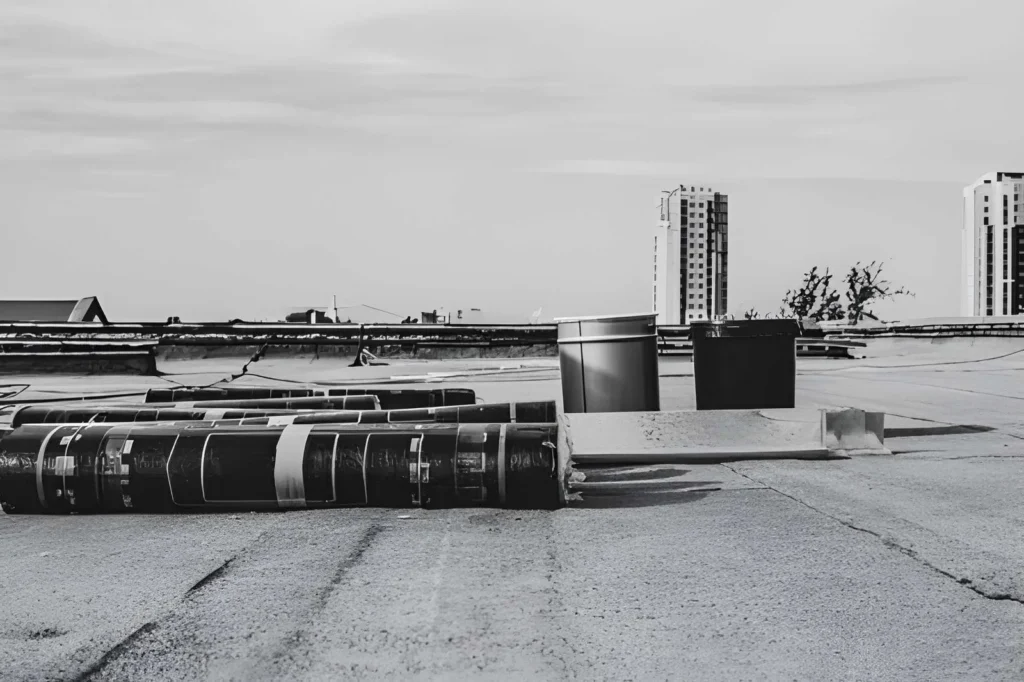
A liquid applied roof starts as a fluid coating and cures into one continuous, seamless membrane directly over what’s already on the roof. Unlike sheet membranes, liquid-applied roofing is installed wet and conforms to the roof surface, including curves, seams, and penetrations. The existing surface still requires proper preparation, and seams and penetrations are treated according to the specified system.
Most systems go down over the existing roof surface rather than replacing it, whether that’s an aged single-ply membrane, an existing asphalt roof, or a metal roof past its coating life.
Reinforcement is installed at seams, flashings, drains and other high-movement points as specified by the coating system, adding strength where the roof is more vulnerable to movement and water entry.
A coating isn’t a patch, and it isn’t a new roof. It’s a renewal layer that depends entirely on the condition of what’s underneath it.
Restoration means adding years of service to a roof that’s still structurally sound, rather than tearing it off and starting over. The coating becomes the new top layer, while the deck, insulation, and most of the existing membrane generally remain in place. Damaged materials still need to be removed and repaired before coating.
Been quoted a tear-off? It’s worth knowing whether you need one yet.
Not every roof qualifies, and knowing why matters more than the coating itself. The existing roof assembly has to be evaluated before a coating-only restoration can be considered.
Whatever membrane or roofing is already there has to be structurally intact and free of moisture before anything goes over it.
Wet insulation can rule out a coating-only restoration. Moisture-damaged materials may need to be removed, repaired, or replaced first.
Real drainage problems need to be addressed before coating. A coating isn't a substitute for proper slope or working drains.
Contamination, loose granules, or inadequate preparation can prevent the coating from bonding correctly.
None of these conditions are reliably visible from the ground, and suitability isn't a judgment made from a photo. Finding out whether an existing roof is a candidate for restoration requires an assessment.
Depending on the existing roof assembly and coating system, the assessment may include core samples, moisture scanning, or adhesion testing. These checks establish whether the existing roof can support a restoration system or whether other work is required first.
Crews clean the surface, remove loose material and contamination, and address damaged areas before coating begins. In some cases, repairs are needed first rather than coating over an existing problem. Inadequate preparation can compromise adhesion and contribute to premature coating failure.
They’re assessed and prepared before coating, with reinforcement installed where the selected system calls for it. The field of the roof matters, but seams, penetrations, and transitions also need attention because they can be vulnerable to movement and water entry.
Application depends on conditions being right for the coating to cure. Required temperature and humidity ranges vary by product, so scheduling follows the manufacturer’s specifications and the conditions at the roof.
Spray application near adjoining buildings, shared parapets, or neighboring properties often requires additional containment. The site needs to be assessed before work begins.
Restoration suits aging roofs that remain fundamentally sound, with intact decking and insulation and an existing membrane suitable for coating. Warehouses, retail buildings, and multi-tenant commercial properties can be good candidates when a tear-off would cause significant disruption to the building below.
Replacement becomes appropriate once a roof has moved past that point, whether that’s widespread wet insulation, a failing deck, or a membrane too far gone for a coating to bond to reliably. A survey is what tells you which side of that line your roof is on. When restoration isn’t appropriate, tear-off and replacement may be the next step. Once a coating is in place, keeping a coated roof in service is a matter of the same inspection habits that apply to any membrane roof.
See coverage across Manhattan, the Bronx, Brooklyn, Queens, Staten Island, Westchester and Nassau, including commercial roofing in Brooklyn and commercial roofing in the Bronx.
We’re one of the commercial roofing contractors in NYC installing and restoring low-slope roofs across this coverage area. See all roofing systems we work with.
No. A coating only works over a substrate that’s dry, structurally sound, and free of contamination. Wet insulation, unresolved drainage problems, or a membrane too far gone to bond to will rule it out, which is exactly what a survey is for.
It depends on why the roof is leaking. A coating renews a sound membrane’s surface and seals minor wear. It won’t fix a failing deck or saturated insulation underneath it.
Yes. Occupied buildings can often remain operational during restoration, although access, ventilation, odors, noise, and work-zone controls depend on the project and coating system.
A roof assessment may use core samples, moisture testing or scanning, and adhesion testing based on the existing assembly and proposed coating system. These checks establish whether restoration is suitable.
Send us the building address and roughly how old the roof is, and we’ll tell you what a survey would need to establish.
Commercial roofing across Manhattan, Brooklyn, the Bronx, Queens, Staten Island, Westchester, and Nassau. MBE, DBE, and LBE certified, OSHA-compliant crews, and $2 million in general liability coverage since 2004.
Copyright © 2026 Keystone Commercial Roofing Contractors.