
A stained ceiling tile, a sagging patch of drywall, a tenant complaint about a drip. These show up long after a leak starts, and often in a different spot than the leak itself. You may also see this called internal roof repair or interior leak repair. It is the same job: stop the leak at the roof, then repair what it damaged below.
The roof has to be fixed first, or the ceiling will stain again.
$2M general liability insurance
Ceiling damage from a roof leak is repaired in two stages: locate and seal the leak at the roof and confirm it is dry, then replace the water-damaged tiles, drywall, insulation, and finishes below. Keystone Commercial Roofing handles both sides of the leak, the roof and what it did to the ceiling, for commercial buildings across New York City, Westchester County and Nassau County.
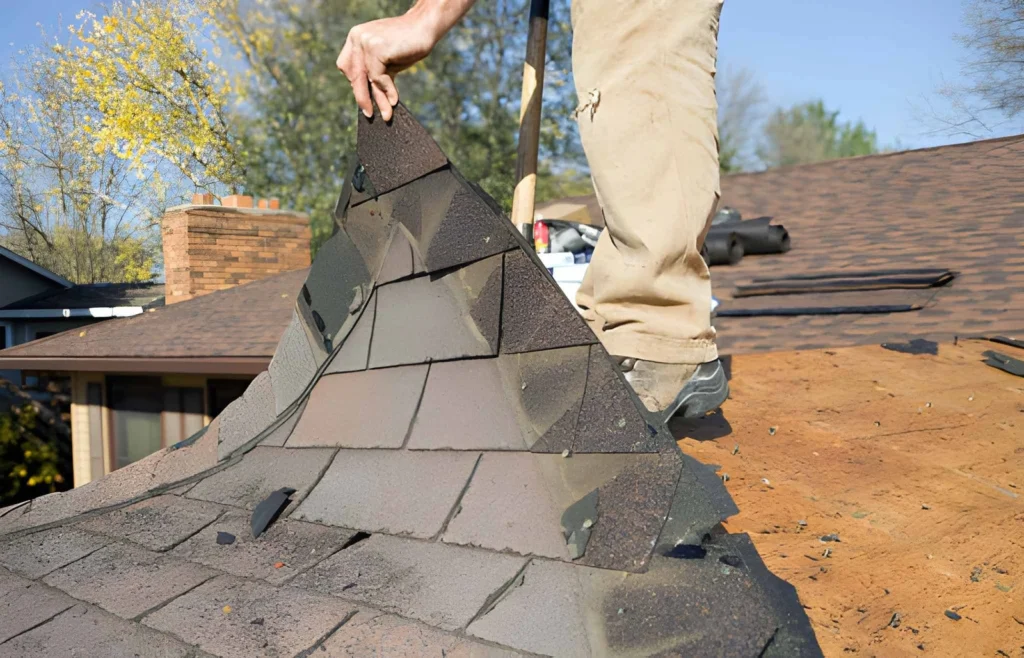
A roof leak rarely announces itself as water falling through a hole. Inside a commercial building it usually shows up as:
Insulation above a suspended ceiling can hold water for weeks with no sign below, which is why ceiling damage from a roof leak keeps reappearing after a first coat of paint.
The stain is often not directly above the leak. Water can travel along beams, ducts, roof framing, or other surfaces before it drops, sometimes for several feet, so the visible damage and the entry point can sit in different parts of the roof. That is why the repair starts with finding where the water is actually getting in.
Repairing a ceiling before the leak is sealed can lead to the same damage returning after the next rain, so sequence matters more than any single repair in the job.
Step one is confirming where water is entering. We inspect the membrane, flashing, and penetrations around and upstream of the interior damage. Once the roof leak is repaired and the area is confirmed dry, interior work can go ahead without the same repair having to happen again after the next rain.
Once an active leak has been sealed, the roof repair and the interior work behind it can be scoped and scheduled together: one contractor, one timeline, instead of two trades on two visits. If the leak is active right now, that is a job for 24/7 emergency roof repair, not a scheduled interior visit.
Not sure where the water is coming from? Send a photo of the damage and the building address, and we will tell you what is likely going on above it, or call (646) 851-3145.
A few steps in the first hour can limit how much damage spreads before we arrive.
Send us a photo. If it is actively leaking, call for emergency roof repair.
With the roof confirmed dry, the interior repair addresses what the leak left behind:
The extent of the work depends on how long the leak went undetected and how far the water traveled before it showed.
Two risks come with any wet ceiling, and both need attention before repair work starts.
Repair work happens around your tenants and their schedule, not on top of it.
We document the damage and the work with dated photos and a written scope, which you can use as part of your insurance claim documentation. Ask us for it when you request an estimate.
We repair roof leak damage in commercial buildings across Manhattan, Brooklyn, Queens, the Bronx, Staten Island, Westchester County and Nassau County. Because the roof and the ceiling below it are rarely two separate jobs, the same crews handle both sides of the leak in every one of these areas. See our full service area list, including interior roof repair in Brooklyn and interior roof repair in the Bronx, or browse all our services.
Water travels along structural members, ducts, and beams before it drops, so the stain and the roof entry point can be several feet apart. Finding the real source means inspecting the roof, not just the ceiling below it.
Yes. Repairing the ceiling before the leak is confirmed sealed usually means repeating the same repair after the next rain.
No. Interior work repairs damage but does not stop water entering. The leak has to be sealed at the roof. Temporary containment inside can limit damage until the roof is fixed.
Yes. The roof repair and the interior repair can be scoped and scheduled together, so you deal with one contractor and one timeline instead of two separate trades on two separate visits.
Insulation above the ceiling line can also be affected, since it can hold water long after the surface below looks dry. Drywall, paint finishes, and nearby stored equipment or inventory are also at risk.
Wet ceiling materials can begin supporting mold growth within 24 to 48 hours, so leaks and wet materials should be dealt with quickly.
It depends on how far the water spread, which materials are affected, whether insulation is wet, access, and whether work has to happen after hours. Send a photo, the building address, and a short description and we will scope it.
A few damaged tiles take far less time than replacing drywall and insulation. The timeline depends on how much material is affected and when the roof is confirmed dry, and we give you a schedule with the scope.
Send a photo of the ceiling and the building address, and we will tell you what is likely going on above it. If the roof is actively leaking right now, call (646) 851-3145 immediately.
$2M general liability insurance, OSHA-compliant safety practices, and commercial roofing work across New York since 2004.
Commercial roofing across Manhattan, Brooklyn, the Bronx, Queens, Staten Island, Westchester, and Nassau. MBE, DBE, and LBE certified, OSHA-compliant crews, and $2 million in general liability coverage since 2004.
Copyright © 2026 Keystone Commercial Roofing Contractors.