
A dark low-slope roof sits above the tenants below and the cooling plant working on top of it, soaking up sun all summer. A reflective coating changes what that surface does with the heat it takes in.
Keystone Commercial Roofing treats heat as a measurable property, not a sales pitch.
$2M general liability insurance
A roof gets called “cool” for two separate reasons, and most conversations about it only cover one.
A reflective surface changes how much heat gets into the building through the roof, in a few specific places.
It sits directly on the surface it’s fighting against. A cooler roof reduces the heat transferred through the roof assembly into the building, which can lower the cooling load the HVAC system has to work against.
Less heat moving through the roof assembly means less of it reaching the ceiling below, usually where tenant complaints start every summer.
A dark membrane reaches far higher surface temperatures in direct sun than a reflective one, and that gap matters for thermal cycling, the daily expansion and contraction that stresses seams and flashing over years of exposure.
The building’s insulation level, its HVAC capacity, or any other source of heat gain that has nothing to do with the roof surface.
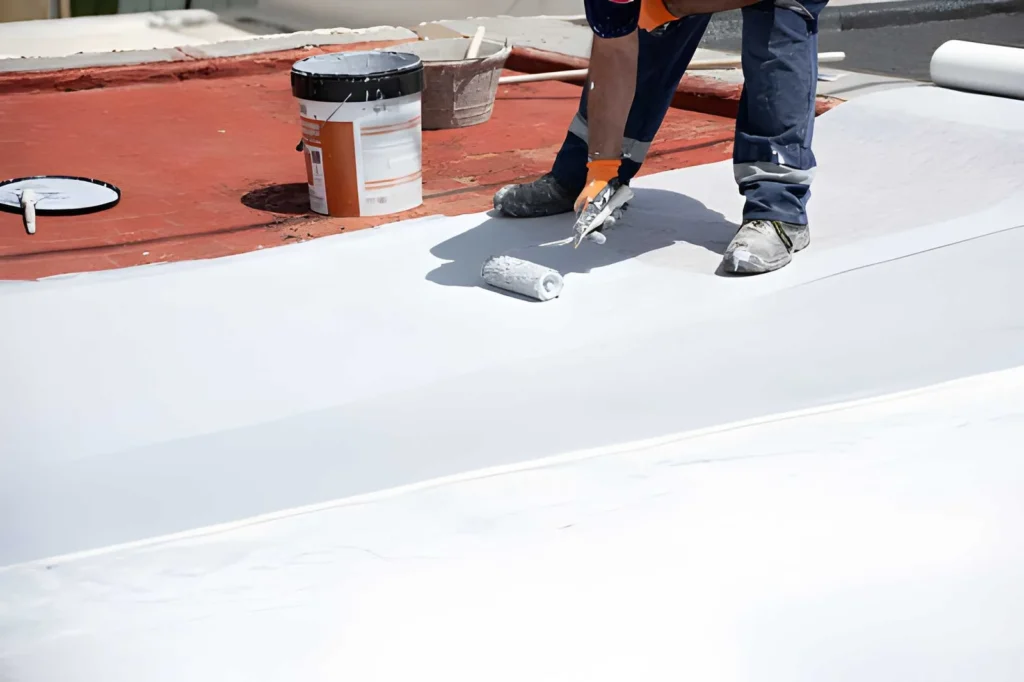
Many New York commercial buildings carry low-slope roofs with dark membrane or asphalt surfaces: built-up roofing, modified bitumen and ballasted membranes among the common types, absorbing sun all summer in buildings packed close enough that heat from one roof has nowhere to go before it reaches the next. That density is part of why some buildings never really cool off through July and August.
Sustainability requirements and city programs are part of why cool roofs come up in New York specifically. New York City’s building code has required cool roofing on new and replacement low-slope roofs since 2011, so a reroofing project often means a reflective surface is required, not optional. NYC CoolRoofs is a separate volunteer program; we’re not affiliated with it and can’t enroll a building in it. Either way, we check what applies to your building when we look at what’s on the roof now.
When you’re replacing the roof anyway, that’s the moment to specify a reflective surface, since you’re already paying for the labor and access.
Send the building address and we’ll tell you what surface is up there now and whether a reflective coating suits it. (646) 851-3145
A light-colored membrane roof, a properly prepared dark asphalt roof, or a metal roof in the right condition.
A coating changes a surface’s optical properties. It doesn’t fix a leak, a soft deck, or a drainage problem; those need a condition survey first.
A roof rarely gets even sun all day. Parapets throw shade in the morning, an adjacent building blocks it in the afternoon, and rooftop units cast their own shadows right on top of some of the hottest spots on the roof.
We walk the roof and map where that’s happening before recommending anything, since a coating only does its job where the sun actually reaches it.
Foot traffic matters too, but differently: the paths crews wear into a roof on the way to a rooftop unit or a hatch break down faster than the rest of the field, so those spots usually need attention sooner than a standard maintenance schedule would call for. None of this rules a coating out. It’s just what we’re actually looking at during a site visit, not a box we check off
If the roof is aging rather than overheating, reflectance isn’t the fix. That’s a question about the roof’s underlying condition.
Looking to extend a roof’s life rather than change its surface? Liquid applied roofing covers that.
We evaluate the roof’s current condition, confirm whether it’s a genuine candidate for coating, prepare the surface, apply the reflective coating suited to what’s up there, and handle the cleaning and re-coating that keeps it performing afterward.
A reflective surface doesn’t stay reflective forever without attention. Soot, dirt and biological growth settle onto a roof over time, and a white roof that’s gone gray has lost a real share of what made it worth installing in the first place.
Cleaning can restore some lost reflectance, when surface dirt or biological growth is the cause. Beyond a certain point, a fresh coat is what actually brings the surface back, not another cleaning.
For a building that already has a coated roof, keeping a reflective roof clean is a maintenance conversation, not a new-installation one.
Got a white roof that isn’t white anymore? That’s a cleaning and re-coat conversation. (646) 851-3145
We apply and maintain reflective roof coatings across Manhattan, the Bronx, Brooklyn, Queens, Staten Island, Westchester and Nassau. See the full service area list for coverage, including commercial roofing in Brooklyn and commercial roofing in the Bronx. See all roofing systems we work with.
Reflectance is the sunlight a surface bounces away before it ever becomes heat. Emittance is about what happens to whatever heat does get absorbed, whether the surface lets it go again or hangs onto it. A roof can be great at one and mediocre at the other, which is why the two get talked about separately instead of lumped into “reflective.”
Generally not much. A reflective roof sends summer sun back before it becomes heat gain, but it does the same to whatever winter sun there is, so it adds no heating benefit.
It has to be sound first. A coating changes reflectance and emittance. It doesn’t fix a leak, a failing deck, or a roof that needs real repair.
That depends on soot, dirt and biological growth building up on the surface, which is why cleaning and re-coating belong in a regular maintenance schedule.
Tell us the address and we’ll take a look at what’s on the roof now. From there we can tell you honestly if a coating’s worth doing, or if something else needs handling fir
Commercial roofing across Manhattan, Brooklyn, the Bronx, Queens, Staten Island, Westchester, and Nassau. MBE, DBE, and LBE certified, OSHA-compliant crews, and $2 million in general liability coverage since 2004.
Copyright © 2026 Keystone Commercial Roofing Contractors.